7 Benefits of Using Cross-Docking Services in Memphis, TN
-
H1: 7 Benefits of Using Cross-Docking Services in Memphis, TN
-
H2: What Is Cross-Docking?
-
H3: How Cross-Docking Works
-
-
H2: Why Memphis Is a Strategic Location for Cross-Docking
-
H3: Memphis as a Major Freight and Distribution Hub
-
-
H2: 7 Major Benefits of Cross-Docking Services
-
H3: 1. Reduce Warehousing and Storage Costs
-
H3: 2. Speed Up Freight and Delivery Times
-
H3: 3. Improve Inventory Flow and Control
-
H3: 4. Reduce Freight Handling and Product Damage
-
H3: 5. Optimize Transportation and Load Consolidation
-
H3: 6. Increase Supply Chain Flexibility
-
H3: 7. Improve Customer Service and Delivery Reliability
-
-
H2: Who Can Benefit From Cross-Docking in Memphis?
-
H3: Industries That Commonly Use Cross-Docking
-
-
H2: Cross-Docking vs. Traditional Warehousing
-
H3: Choosing the Right Logistics Strategy
-
-
H2: How to Choose Cross-Docking Services in Memphis, TN
-
H2: Conclusion
-
H2: FAQs
-
What Is Cross-Docking?
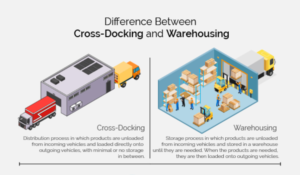
Cross-docking cross docking services Memphis TN is a logistics strategy designed to move products through a distribution facility with little or no long-term storage. Instead of receiving freight, placing it into warehouse storage, picking it later, and eventually shipping it out, a cross-docking operation moves incoming goods toward their next destination almost immediately.
The basic concept is simple: freight arrives at an inbound dock, is unloaded and sorted according to destination or customer requirements, and then moves to an outbound dock where it is loaded onto another truck or transportation mode. IBM similarly defines cross-docking as eliminating the storage process by moving items directly from the receiving dock toward shipping or forward-pick areas.
That difference can have a major effect on a company’s supply chain. Traditional warehousing treats storage as a central part of distribution, while cross-docking treats the facility more like a transfer point. Think of it as a busy airport rather than a parking lot: freight is not supposed to sit around indefinitely; it is coordinated, transferred, and sent onward. This approach can be particularly useful for businesses handling high-volume shipments, time-sensitive freight, retail replenishment, consolidated loads, and products that do not require extended storage.
When the inbound and outbound schedules are properly coordinated, cross docking services in Memphis TN can help businesses reduce unnecessary touches, shorten transit-related delays, and create a more streamlined path between suppliers and customers.
How Cross-Docking Works
A successful cross-docking operation depends on timing, organization, communication, and accurate shipment information. A typical shipment begins when an inbound truck arrives at a cross-dock facility with freight that has already been assigned to particular customers, routes, stores, destinations, or outbound transportation requirements. Workers unload the freight, inspect or scan it as required, sort it by destination, and move it across the dock to the appropriate outbound staging area.
Instead of putting those products into long-term warehouse racks, the facility focuses on getting them onto the correct outbound vehicle as quickly as practical. This minimizes unnecessary warehouse activity such as putaway, long-term storage, repeated picking, and additional internal transportation.
The process can look different depending on the freight and service provider. Some operations use pre-distribution cross-docking, where customer orders are already known before the goods arrive. Others use post-distribution cross-docking, where products are received first and then allocated based on current demand. Freight can also be consolidated when several smaller inbound shipments are combined into a more efficient outbound load.
The goal is not simply to move freight quickly; it is to coordinate the entire flow so that transportation capacity, dock space, labor, and delivery schedules work together. Inbound Logistics notes that cross-docking can reduce storage, labor, transportation, and inventory costs while improving the speed at which products move through the supply chain.
Why Memphis Is a Strategic Location for Cross-Docking
Location matters enormously in logistics, and Memphis, Tennessee has several characteristics that make it attractive for freight transfer and distribution. The city sits in a strategically important position within the central United States and connects multiple transportation modes, including highways, rail, air cargo, and the Mississippi River. The Memphis region is also home to a substantial transportation and warehousing workforce and has a large industrial real estate base, supporting the infrastructure required by modern distribution operations.
A 2025 Colliers industrial market report described the Memphis region as “America’s Distribution Center” and highlighted its access to all four major transportation modes and five Class I railroads.
The scale of the local freight ecosystem is another reason businesses consider Memphis for distribution activities. Memphis International Airport reported approximately 6.54 billion pounds of cargo handled in 2025, demonstrating the enormous volume moving through the region’s air cargo infrastructure. FedEx also continues to operate its largest air hub in Memphis, with its 2025 economic impact report describing a 940-acre Memphis complex that employs approximately 13,000 people and processes hundreds of thousands of packages per hour.
For companies moving freight across regional, national, or international supply chains, this transportation density can make Memphis a practical location for transferring, consolidating, staging, and redirecting shipments.
Memphis as a Major Freight and Distribution Hub
Memphis is not simply a city where warehouses happen to exist; its transportation infrastructure has developed around the movement of freight. Major trucking routes connect the area to markets across the Southeast, Midwest, Southwest, and other parts of the country, while rail and river infrastructure add additional options for shippers. The presence of a major international cargo airport further expands the region’s ability to handle time-sensitive and high-volume shipments.
FedEx’s continued investment in Memphis reinforces the city’s position within global logistics networks, while the broader industrial market supports numerous third-party logistics providers, warehouses, transportation companies, and distribution operations.
For a business, this connectivity can translate into practical advantages. A company may receive freight from a supplier in one state, transfer it at a Memphis cross-dock, consolidate it with other shipments, and send the combined load toward several destinations without keeping every product in long-term storage. That can be especially useful when freight needs to move through the region rather than remain there.
The important point is that cross docking services in Memphis TN can complement the city’s broader transportation network instead of requiring a company to establish a large dedicated distribution operation of its own. When properly planned, the cross-dock becomes a strategic bridge between inbound transportation and final or regional delivery.
7 Major Benefits of Cross-Docking Services
Cross-docking can provide benefits beyond simply saving warehouse space. The real value comes from removing unnecessary steps from the supply chain and creating a more direct movement of freight from origin toward destination. Every additional warehouse activity can consume labor, equipment time, floor space, and money. Every additional touch can also create another opportunity for delays, misrouting, or product damage.
By designing the process around rapid transfer and coordinated outbound transportation, companies can make their distribution model leaner and more responsive. The seven benefits below explain why businesses across different industries use cross-docking as part of their logistics strategy.
1. Reduce Warehousing and Storage Costs
One of the most obvious advantages of cross-docking is the potential to reduce the amount of warehouse storage a company needs. Traditional warehousing requires space for inventory to sit between receiving and shipping. That space comes with costs that extend beyond monthly rent or facility expenses.
Businesses may also need shelving, racks, forklifts, warehouse management systems, utilities, insurance, security, maintenance, and employees dedicated to receiving, putaway, picking, replenishment, and shipping. When freight can move directly from inbound transportation to outbound transportation, many of those activities become less extensive.
Cross-docking does not necessarily eliminate every warehousing expense, and it is not appropriate for every shipment. However, it can reduce the need to maintain large amounts of inventory in storage when goods are already scheduled to move toward customers or downstream facilities. Inbound Logistics identifies reduced storage, labor, transportation, and inventory costs among the primary advantages of cross-docking. The financial effect becomes especially meaningful for companies handling high volumes or products with predictable demand.
Rather than paying to store products simply because the traditional distribution process requires it, a company can use a cross-dock to keep freight moving. This can free capital that would otherwise be tied up in inventory and allow businesses to allocate resources toward transportation, customer service, production, or growth.
2. Speed Up Freight and Delivery Times
When products spend less time sitting inside a warehouse, they can potentially reach their next destination faster. Traditional distribution may involve receiving freight, unloading it, inspecting it, placing it into storage, waiting for an order, picking the inventory, staging the order, and loading an outbound vehicle. Each step introduces time into the process. Cross-docking compresses that sequence by moving freight directly toward outbound transportation, making the distribution facility a transfer point rather than a long-term storage location.
Faster movement can be especially valuable when customers expect short delivery windows or when products have a limited useful shelf life. Retail replenishment, promotional products, food-related shipments, seasonal merchandise, and urgent commercial freight can all benefit when unnecessary storage time is removed.
Inbound Logistics explains that cross-docking can reduce the time goods spend moving between stages of production or distribution and can help suppliers respond faster to orders. In Memphis, the advantage is amplified by the region’s extensive transportation infrastructure. A strategically located cross-dock can help synchronize incoming freight with outbound trucks and other transportation services, allowing a shipment to keep moving instead of waiting for warehouse processing.
3. Improve Inventory Flow and Control
Inventory is expensive when it moves too slowly. Products sitting in storage represent capital that has already been spent but has not yet generated revenue, and excessive inventory can also create additional risks such as obsolescence, damage, shrinkage, or inaccurate stock levels. Cross-docking approaches inventory from a different direction: instead of maximizing the amount of product stored inside a facility, the objective is to maintain a controlled flow of goods through the distribution network. That makes cross-docking particularly useful for businesses with predictable demand and reliable transportation schedules.
A faster inventory flow can also improve visibility when the operation is supported by accurate scanning, shipment records, and real-time communication. Each shipment should be associated with the correct destination and outbound plan so workers know where it needs to go next. Inbound Logistics emphasizes that effective cross-docking requires continuous shipment visibility because poor tracking can create delays, misplaced shipments, duplicate shipments, and unnecessary inventory. In other words, cross-docking does not magically solve inventory problems.
It creates the opportunity for better inventory flow, but the business and logistics provider still need strong processes, accurate data, and disciplined execution to turn that opportunity into measurable results.
4. Reduce Freight Handling and Product Damage
Every time freight is moved, there is a possibility of delay or damage. A pallet may be unloaded, transported to storage, placed into a rack, retrieved days later, moved to a staging area, and loaded onto a truck. Cross-docking can reduce some of those unnecessary touches by transferring freight directly toward its outbound shipment. Fewer touches can mean less internal movement, less equipment usage, fewer handling steps, and fewer opportunities for a product to be mishandled.
The objective is not simply to make workers move faster. A well-designed cross-docking operation reduces the number of times freight needs to be handled in the first place. Inbound Logistics specifically recommends handling each piece of freight only once whenever possible because direct movement to the outbound area reduces wasted effort and can also minimize opportunities for product damage.
For businesses shipping packaged goods, pallets, retail merchandise, or other freight where condition matters, this can be a meaningful operational advantage. Better handling can also improve consistency: when freight follows a clearly defined inbound-to-outbound path, employees spend less time searching for products and more time executing the planned movement of shipments.
5. Optimize Transportation and Load Consolidation
Transportation is often one of the largest expenses in a supply chain, especially when companies regularly ship partially filled trucks. Cross-docking can help address this problem by allowing freight from multiple inbound sources to be sorted and consolidated according to destination. Several smaller shipments heading toward the same market may be combined into a more efficient outbound load. Instead of each shipment traveling independently, the cross-dock can act as a coordination point where freight is organized before the next transportation leg.
This matters because transportation efficiency is not only about how quickly a truck moves; it is also about how effectively its available capacity is used. A more complete load can spread transportation costs across a greater quantity of freight and reduce unnecessary trips. Inbound Logistics describes consolidation as one of the common applications of cross-docking and notes that the strategy can help companies improve truck capacity utilization and reduce transportation expenses.
Memphis is particularly relevant for this approach because its central location and multimodal infrastructure provide numerous connections for freight moving across the country. A business that works with a capable local cross-docking provider can use the facility to consolidate freight and coordinate outbound transportation without necessarily operating its own large distribution center.
6. Increase Supply Chain Flexibility
Modern supply chains rarely operate under perfectly predictable conditions. Customer demand changes, transportation schedules shift, suppliers experience delays, and businesses may suddenly need to move products into a different market. A distribution strategy built entirely around long-term storage can make those changes harder to manage because inventory may already be sitting in a specific warehouse and require additional handling before it can be redirected. Cross-docking provides another option by keeping goods moving through the network with less dependence on long-term storage.
That flexibility can be particularly valuable during seasonal demand, promotional periods, new product launches, regional replenishment, or temporary changes in distribution requirements. A company may need to receive a large shipment and immediately divide it among several destinations rather than storing the entire shipment in one location. Cross-docking makes that type of rapid allocation possible when transportation schedules and shipment information are properly coordinated. Research and industry guidance consistently identify flexibility and responsiveness as important cross-docking advantages.
For Memphis businesses and companies routing freight through Memphis, this can create a more adaptable distribution model that responds to market requirements instead of relying entirely on fixed warehouse inventory positions.
7. Improve Customer Service and Delivery Reliability
Customers generally do not care how complicated a company’s internal logistics process is; they care whether the right product arrives when promised and in acceptable condition. Cross-docking can support that objective by shortening the distance between receiving and outbound shipment. When freight moves through fewer stages, there are fewer opportunities for unnecessary waiting between those stages. A streamlined process can also make it easier to establish clear delivery schedules and coordinate transportation around customer requirements.
Customer service is therefore one of the broader benefits of efficient cross-docking. Faster fulfillment can support shorter delivery windows, while better shipment organization can reduce errors associated with unnecessary handling and storage. The benefits are not automatic, because reliability still depends on transportation availability, accurate documentation, good communication, and proper execution.
However, when those elements are in place, a cross-dock can become an important part of a service-oriented distribution strategy. For businesses competing on delivery performance, cross docking services Memphis TN can provide a practical way to improve freight velocity without building an entirely new distribution infrastructure from scratch.
Who Can Benefit From Cross-Docking in Memphis?
Cross-docking is most useful when a company’s freight characteristics match the operational model. Businesses with predictable shipment volumes, frequent replenishment requirements, time-sensitive deliveries, or opportunities to consolidate loads may be strong candidates. Retailers can use cross-docking to move merchandise from suppliers toward stores without maintaining excessive stock in an intermediate warehouse. Manufacturers can use it to coordinate inbound components or finished goods with outbound transportation. Distributors can use it to consolidate freight headed toward common destinations and reduce the number of individual transportation movements.
The strategy can also help businesses that do not need traditional long-term storage but still need a physical location where freight can be received, sorted, transferred, and dispatched. This distinction is important. A cross-docking provider is not simply a cheaper warehouse; it performs a different operational function.
The right provider should understand shipment timing, dock scheduling, freight handling, load consolidation, documentation, and outbound transportation coordination. Businesses should evaluate whether their freight can realistically move through a cross-dock without creating bottlenecks. When the answer is yes, the model can become a valuable part of a broader Memphis logistics strategy.
Industries That Commonly Use Cross-Docking
Cross-docking can serve a wide range of industries because the underlying principle—moving freight efficiently from inbound transportation to outbound transportation—is not limited to one product category. Retail and consumer goods companies are frequent users because stores often need regular replenishment without carrying excessive inventory at every distribution point.
Food and beverage companies may also benefit when products need to move quickly through the network, particularly when extended storage is undesirable. Manufacturing and industrial businesses can use cross-docking for components, finished products, and shipments that need to be consolidated before reaching customers or facilities.
Other potential applications include e-commerce distribution, automotive logistics, wholesale distribution, construction materials, and third-party logistics operations. The specific process should always be adapted to the freight. Temperature-sensitive goods, hazardous materials, oversized freight, fragile products, and shipments requiring specialized inspection may have additional requirements that need to be addressed before selecting a cross-docking model.
The best question is not simply, “Can this freight be cross-docked?” Instead, businesses should ask, “Can this freight be cross-docked reliably, safely, and economically while meeting our delivery requirements?” That distinction helps prevent companies from adopting cross-docking simply because it sounds efficient when their actual shipment profile may require more conventional storage or specialized handling.
Cross-Docking vs. Traditional Warehousing
| Factor | Cross-Docking | Traditional Warehousing |
|---|---|---|
| Primary purpose | Rapid freight transfer | Storage and distribution |
| Storage time | Minimal or none | Short- or long-term |
| Inventory levels | Generally lower | Often higher |
| Handling | Fewer touches | More receiving, putaway, picking, and staging |
| Delivery speed | Designed for rapid movement | Depends on inventory and fulfillment workflow |
| Space requirement | Focused on docks and staging | Larger storage footprint |
| Best suited for | High-volume, predictable, time-sensitive freight | Inventory requiring storage or order-based fulfillment |
| Transportation consolidation | Strong potential | Possible, but not the primary purpose |
| Operational dependency | High coordination required | More tolerant of scheduling gaps |
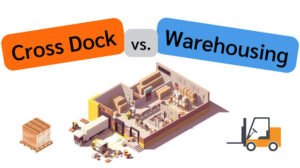
The difference between these models is not that one is universally better than the other. Cross-docking and warehousing solve different logistics problems. Traditional warehousing is valuable when a business needs to hold inventory until orders are received, manage fluctuating demand, maintain safety stock, or store products for an extended period. Cross-docking is more appropriate when goods already have a clear destination and can move through the facility without requiring significant storage. A hybrid approach can also make sense: some products may be cross-docked while others are stored based on demand, product characteristics, or customer requirements.
Choosing the Right Logistics Strategy
Before selecting cross-docking, a business should analyze its shipment patterns rather than assuming that every load will benefit from the model. Start with the basics: How frequently does freight arrive? How predictable are inbound and outbound schedules? Are customer destinations known before the shipment reaches the facility? Can transportation be coordinated closely enough to prevent freight from sitting on the dock? How much storage is currently required, and what portion of that inventory could realistically bypass storage? These questions reveal whether cross-docking can remove actual inefficiencies or simply move them somewhere else in the supply chain.
Technology and visibility should also be part of the evaluation. A cross-docking operation depends on knowing what freight is arriving, where it needs to go, when the outbound transportation is expected, and whether the shipment has been successfully transferred. Inbound Logistics highlights real-time visibility as a critical component of successful cross-docking because poor tracking can undermine the efficiency gains the model is designed to provide.
Businesses should therefore look beyond facility size when evaluating cross docking services in Memphis TN. The provider’s scheduling process, freight-handling procedures, communication, tracking capabilities, transportation relationships, and experience with the relevant freight type can be just as important as the physical facility.
How to Choose Cross-Docking Services in Memphis, TN
Choosing a cross-docking provider should begin with operational fit. A business should look for a provider capable of handling its specific freight type, volume, pallet configuration, scheduling requirements, and destination network. Ask how inbound appointments are managed, how freight is identified and sorted, how shipment discrepancies are handled, and how quickly freight can typically move from receiving to outbound staging. It is also useful to understand what happens when an inbound truck arrives late or an outbound truck is delayed. A strong provider should have processes for exceptions rather than assuming every shipment will arrive exactly on schedule.
Location should be evaluated alongside service capability. A Memphis cross-dock can be strategically valuable because the region provides access to major transportation infrastructure, but the specific facility still needs to fit the company’s transportation lanes. Businesses should consider proximity to major highways, airports, rail connections, customers, suppliers, and existing carrier routes. Memphis’s extensive freight infrastructure gives companies multiple options, but those options only create value when they align with actual shipment requirements.
The best cross docking services Memphis TN provider is therefore not necessarily the largest facility; it is the provider that can reliably coordinate the right combination of freight handling, timing, visibility, consolidation, and transportation for the company’s specific supply chain.
Conclusion
Cross-docking can turn a traditional storage-heavy distribution process into a faster, more coordinated flow of freight. By moving products from inbound transportation toward outbound transportation with minimal storage, businesses can potentially reduce warehousing expenses, accelerate deliveries, improve inventory flow, reduce handling, consolidate transportation, respond more flexibly to demand, and strengthen customer service.
These advantages become particularly relevant in Memphis because the city has a dense transportation ecosystem connecting trucking, rail, air cargo, and river transportation. Memphis International Airport handled approximately 6.54 billion pounds of cargo in 2025, while the region continues to support major logistics and distribution operations.
The key is implementation. Cross-docking works best when inbound and outbound transportation are synchronized, shipment information is accurate, freight is properly identified, and the logistics provider has disciplined processes for handling exceptions. It should not be viewed as simply eliminating warehouse shelves; it is a coordinated supply chain strategy that replaces unnecessary storage and handling with controlled freight movement
. For companies looking to make their distribution network faster and more efficient, evaluating cross docking services Memphis TN can be a practical starting point. When the freight profile and operational requirements are a good match, cross-docking can help businesses move closer to a leaner, faster, and more responsive supply chain.
FAQs
What are cross-docking services?
Cross-docking services involve receiving freight at a facility and transferring it toward outbound transportation with little or no long-term storage. Instead of placing products into warehouse inventory, the freight is sorted, staged, consolidated when necessary, and loaded onto the next transportation leg. The objective is to reduce unnecessary storage and handling while improving the speed and efficiency of distribution.
Why is Memphis a good location for cross-docking?
Memphis has a strong transportation infrastructure that includes major highways, railroads, air cargo facilities, and access to the Mississippi River. The city also has a major FedEx air hub and a large logistics and warehousing sector. Memphis International Airport reported approximately 6.54 billion pounds of cargo handled in 2025, highlighting the scale of freight activity in the region.
Can cross-docking reduce logistics costs?
It can. Cross-docking may reduce storage costs, warehouse labor, inventory carrying expenses, and transportation costs when freight can be consolidated efficiently. However, the actual savings depend on shipment volume, scheduling, transportation rates, handling requirements, and how effectively the operation is managed. Cross-docking should therefore be evaluated against a company’s specific logistics data rather than treated as a guaranteed cost reduction.
What types of businesses benefit most from cross-docking?
Businesses with high-volume, predictable, time-sensitive, or frequently replenished shipments are often good candidates. Retailers, manufacturers, distributors, e-commerce businesses, food and beverage companies, and third-party logistics providers can all potentially benefit. The strongest candidates are usually companies whose freight already has a known destination and does not need to remain in storage for an extended period.
How do I choose cross-docking services in Memphis, TN?
Evaluate the provider’s facility location, freight-handling capabilities, scheduling process, transportation connections, tracking and visibility systems, labor capacity, and experience with your type of freight. Ask how the provider handles delayed arrivals, shipment discrepancies, damaged freight, and changes to outbound schedules. Most importantly, choose a provider whose operational model matches your shipment volume and delivery requirements rather than selecting solely on facility size or price.