
What Is Cross-Docking and How Does It Work in Memphis? A Powerful 7-Step Guide
Cross-docking is changing the way many businesses manage freight by reducing unnecessary warehouse storage and moving products directly from inbound transportation to outbound delivery. For companies operating in Memphis, this approach can be especially valuable because of the city’s strong position as a national logistics and distribution hub. This guide explains what cross-docking is, how the process works, its benefits, and what businesses should consider when choosing a cross-docking provider.
Comprehensive Outline
| Section | Topic Covered |
|---|---|
| 1 | What cross-docking means and why it matters |
| 2 | How cross-docking works |
| 3 | The 7-step cross-docking process |
| 4 | Cross-docking vs. traditional warehousing |
| 5 | Why Memphis is ideal for cross-docking |
| 6 | Major benefits for businesses |
| 7 | Types of cross-docking |
| 8 | Industries that can benefit |
| 9 | Technology and inventory visibility |
| 10 | Common cross-docking challenges |
| 11 | How to choose a Memphis provider |
| 12 | Costs and operational considerations |
| 13 | Best practices for successful operations |
| 14 | Frequently asked questions |
| 15 | Conclusion |
What Is Cross-Docking?
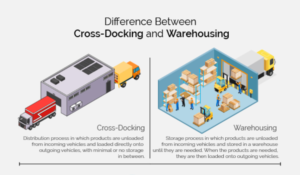
Cross-docking is a logistics process where incoming freight is received, sorted, and transferred directly to an outbound vehicle with little or no long-term storage in between. Instead of placing products into warehouse racks and keeping them there for days or weeks, a cross-docking facility acts as a transfer point.
The basic idea is simple: receive, sort, transfer, and ship.
For businesses searching for cross docking Memphis TN, the goal is usually to reduce handling time, shorten delivery cycles, and make better use of transportation and warehouse resources.
Traditional warehousing often involves several steps. A shipment arrives, workers unload it, products are inspected, inventory is recorded, goods are placed into storage, an order is later picked, products are packed, and the shipment is finally loaded onto another truck.
Cross-docking removes many of those steps.
For example, imagine a retailer receives 20 pallets of products from a manufacturer. Ten pallets are intended for stores in Memphis, five are going to Nashville, and five are going to Birmingham. Instead of storing all 20 pallets, a cross-docking facility can receive the shipment, separate it by destination, and load each group onto the appropriate outbound transportation.
The freight spends much less time sitting in a warehouse.
Why Does Cross-Docking Matter?
Storage isn’t always the most efficient part of a supply chain. In many situations, the product doesn’t need to remain inside a warehouse at all.
Every additional handling stage can introduce:
Labor costs
Storage costs
Product damage risks
Inventory discrepancies
Loading delays
Additional transportation coordination
Longer order-to-delivery times
Cross-docking is designed to reduce those unnecessary stages.
The process can be particularly useful when shipments are already scheduled for known destinations. Instead of asking a warehouse to store and later retrieve freight, the facility can coordinate inbound and outbound movements around the same shipment.
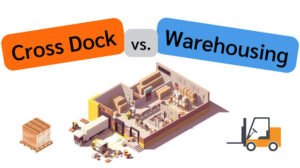
Cross-Docking vs. Warehousing
The two services aren’t competitors in every situation. In fact, many businesses use both.
| Traditional Warehousing | Cross-Docking |
|---|---|
| Freight is stored | Freight is transferred |
| Products may remain for days or weeks | Products may move within hours |
| Picking is often required | Minimal picking |
| Higher storage requirements | Lower storage requirements |
| Useful for inventory holding | Useful for rapid distribution |
| More warehouse space needed | Less storage space required |
The right approach depends on the product, supply chain, delivery schedule, order volume, and customer requirements.
How Does Cross-Docking Work?
Although individual facilities use different procedures, a typical cross-docking operation follows a predictable sequence.
The process begins before the truck reaches the facility. Shipment information, purchase orders, destination details, pallet counts, and delivery schedules need to be coordinated in advance.
When the inbound truck arrives, warehouse personnel unload the freight. The shipment is then checked against the available documentation and sorted according to its next destination.
Instead of being placed into long-term storage, the freight is directed toward the appropriate outbound staging area.
The outbound truck is then loaded according to its route, delivery sequence, and customer requirements.
This process requires coordination between transportation companies, warehouse teams, shippers, receivers, and sometimes third-party logistics providers.
The 7-Step Cross-Docking Process
1. Schedule the Inbound Shipment
The process starts with transportation scheduling.
The facility needs to know when freight will arrive, how much freight is coming, what type of freight is involved, and where it needs to go next.
Accurate scheduling helps prevent trucks from arriving at the same dock at the same time and creating congestion.
2. Receive the Freight
When the inbound truck arrives, warehouse personnel unload the shipment.
The receiving team checks important details such as:
Pallet count
Shipment identification
Product condition
Labels
Purchase orders
Destination information
Visible damage
Fast receiving is important because the objective is to keep freight moving.
3. Inspect and Verify
The shipment is checked for discrepancies.
If the paperwork says there should be 30 pallets but only 28 arrive, the discrepancy needs to be recorded. Similarly, damaged freight should be identified before it continues through the distribution network.
Good receiving procedures help protect both the shipper and the logistics provider.
4. Sort the Freight
Once received, freight is organized according to its destination or outbound transportation plan.
For example, a shipment may be divided into:
Memphis-area deliveries
Regional deliveries
Store-specific orders
Customer-specific orders
LTL shipments
Full truckload shipments
The exact sorting method depends on the operation.
5. Stage for Outbound Transportation
After sorting, freight is moved to an outbound staging location.
Staging shouldn’t become long-term storage. The purpose is to position the freight so it can be loaded efficiently when the outbound truck arrives.
6. Load Outbound Vehicles
The freight is loaded based on route requirements and delivery sequence.
Proper loading is critical. A truck that makes multiple stops should generally be loaded so the freight needed at the first destination can be accessed without unnecessarily unloading other shipments.
7. Dispatch and Track
Finally, the outbound vehicle leaves the facility.
Shipment information should be updated so the shipper and other authorized parties can maintain visibility throughout the delivery process.
This seven-step process may happen quickly when the operation is well planned. That’s one of the main reasons companies use cross-docking as part of their supply chain strategy.
Cross-Docking vs. Traditional Warehousing
Cross-docking and traditional warehousing solve different logistics problems.
A warehouse is designed to hold inventory. Cross-docking is designed to move inventory.
A company with unpredictable demand may need warehouse storage because products have to remain available until customers place orders. On the other hand, a company with predictable shipment schedules may benefit from moving goods directly through a transfer facility.
When Traditional Warehousing Makes More Sense
Warehousing can be preferable when:
Inventory must be held for extended periods.
Customer demand is unpredictable.
Products require special storage conditions.
Orders are assembled over time.
Seasonal inventory needs to be stored.
Safety stock is required.
When Cross-Docking Makes More Sense
Cross-docking may be preferable when:
Shipments have known destinations.
Products move quickly.
Inventory turnover is high.
Delivery schedules are predictable.
Storage time should be minimized.
Multiple inbound shipments need to be consolidated.
Freight needs to be transferred between transportation routes.
Many sophisticated supply chains use a hybrid approach. Some products may go directly through cross-docking while others are placed into short-term or long-term storage.
Why Memphis Is a Strategic Location for Cross-Docking
Memphis has a major advantage for logistics operations: location.
The city is positioned within reach of important regional and national markets and has extensive transportation infrastructure. Its logistics ecosystem includes highways, rail connections, air cargo operations, distribution centers, trucking companies, and warehouses.
That makes Memphis a natural location for freight transfer and distribution.
Companies don’t necessarily need to maintain their own large warehouse to benefit from the city’s logistics network. A strategically located cross-docking facility can serve as a link between suppliers, carriers, distribution centers, retailers, and final customers.
Memphis and Regional Distribution
A shipment entering Memphis may need to continue toward several surrounding markets.
Instead of sending every shipment directly from its original origin to every individual destination, companies can consolidate transportation and use Memphis as a distribution point.
For example:
Supplier → Memphis Cross-Dock → Multiple Regional Destinations
This model can simplify transportation planning and improve truck utilization.
The value becomes even more apparent when a business regularly handles large volumes of palletized freight.
Why Location Matters
A cross-docking facility isn’t useful simply because it has docks.
Its location needs to support the transportation network.
Important considerations include:
Highway access
Distance from major distribution markets
Truck accessibility
Dock capacity
Yard space
Driver convenience
Operating hours
Proximity to customers
Access to transportation partners
A facility that saves several hours of transportation time can create meaningful operational advantages over time.
Major Benefits of Cross-Docking
The biggest reason companies consider cross-docking is efficiency.
When freight doesn’t need to remain in storage, businesses can potentially reduce several costs associated with traditional warehousing.
1. Reduced Storage Requirements
Cross-docking can reduce the amount of warehouse space required for certain products.
Businesses don’t necessarily need to rent large storage areas for freight that is already scheduled for delivery.
2. Faster Product Movement
Freight can move from inbound transportation to outbound transportation without sitting in inventory for extended periods.
This can help businesses respond faster to customer demand.
3. Lower Handling
Every time freight is moved, there is an opportunity for damage or error.
Reducing unnecessary handling can improve operational efficiency and potentially reduce product damage.
4. Better Inventory Flow
Cross-docking supports faster inventory turnover.
Products spend less time waiting in a facility and more time moving through the supply chain.
5. Reduced Labor Requirements
Traditional warehousing may require receiving, put-away, picking, packing, and shipping activities.
Cross-docking can eliminate or reduce some of these tasks.
The exact labor savings depend on the operation and shipment type.
6. Improved Delivery Speed
Faster freight movement can help companies meet demanding delivery schedules.
This is particularly important for retailers, distributors, manufacturers, and businesses operating on tight replenishment cycles.
7. Better Transportation Utilization
Multiple inbound shipments can sometimes be consolidated into more efficient outbound loads.
This can help businesses improve truck utilization and reduce unnecessary transportation movements.
Types of Cross-Docking
Not every cross-docking operation works in the same way.
Continuous Cross-Docking
Freight moves almost immediately from inbound to outbound transportation.
This model requires strong scheduling and reliable transportation coordination.
Consolidation Cross-Docking
Multiple smaller shipments are combined into a larger outbound shipment.
This can improve transportation efficiency when individual shipments would otherwise occupy only part of a truck.
Deconsolidation Cross-Docking
A large inbound shipment is divided into smaller shipments for different destinations.
For example, a manufacturer might send one large truckload to Memphis, where the freight is separated into smaller regional deliveries.
Opportunistic Cross-Docking
Freight is redirected directly to an outbound order when the appropriate demand already exists.
This can reduce unnecessary storage when the shipment has a known destination.
Which Industries Can Benefit From Cross-Docking?
Cross-docking isn’t limited to one industry.
Retail
Retailers frequently move products from distribution centers to stores. Fast product movement can help support replenishment schedules.
Manufacturing
Manufacturers can use cross-docking to move components or finished goods between suppliers, facilities, and customers.
Food and Beverage
Products with limited shelf life can benefit from faster movement because reducing unnecessary storage time can help maintain freshness.
Consumer Goods
High-volume consumer products often move through distribution networks quickly, making them suitable candidates for cross-docking.
E-Commerce
E-commerce businesses can use cross-docking to consolidate products and move orders closer to final delivery markets.
Automotive
Automotive supply chains often depend on precise delivery schedules. Cross-docking can help move components where they’re needed without excessive storage.
Technology and Inventory Visibility
Technology plays an important role in modern cross-docking operations.
A facility needs to know what freight is arriving, what is leaving, and where each shipment belongs.
Warehouse management systems, transportation management systems, barcode scanners, electronic documentation, and shipment tracking tools can all support this process.
Barcode Scanning
Barcode scanning can help warehouse teams identify shipments quickly and reduce manual data entry.
Warehouse Management Systems
A warehouse management system can help coordinate receiving, staging, inventory records, and outbound shipments.
Transportation Management
Transportation management software can help coordinate inbound and outbound transportation schedules.
Real-Time Visibility
Better shipment visibility allows businesses to identify delays, discrepancies, and exceptions sooner.
The technology doesn’t replace good warehouse processes. Instead, it supports them.
Common Cross-Docking Challenges
Cross-docking offers substantial advantages, but it isn’t automatically the right solution for every company.
Scheduling Problems
If an inbound truck arrives several hours late, the outbound truck may already be waiting.
That can create congestion, labor inefficiency, and additional transportation costs.
Shipment Errors
Incorrect labels, missing paperwork, damaged pallets, or inaccurate shipment quantities can slow the entire operation.
Limited Storage Buffer
Cross-docking reduces storage by design. That can become a challenge when transportation schedules change unexpectedly.
Poor Communication
Cross-docking requires coordination between multiple parties. If the shipper, warehouse, and carrier aren’t communicating effectively, delays can occur.
Inadequate Facility Capacity
A facility needs enough dock doors, staging space, labor, and equipment to handle its expected volume.
A cross-docking strategy can fail if freight volume exceeds the facility’s operational capacity.
How to Choose a Cross-Docking Provider in Memphis
Choosing a provider requires more than comparing prices.
Businesses should evaluate the entire operating model.
1. Evaluate Facility Location
Look for convenient access to major transportation routes and your key delivery markets.
2. Check Dock Capacity
Ask how many dock doors the facility has and whether it can handle your expected shipment volume.
3. Understand Operating Hours
If your transportation schedule includes nights or weekends, confirm that the facility can support those requirements.
4. Ask About Equipment
Depending on the freight, you may need forklifts, pallet jacks, dock equipment, scales, or specialized handling capabilities.
5. Review Freight Handling Procedures
Ask how shipments are received, inspected, sorted, staged, and loaded.
6. Confirm Technology Capabilities
Find out whether the provider offers shipment tracking, barcode scanning, inventory visibility, electronic documentation, or system integrations.
7. Review Transportation Coordination
A strong provider should understand how its operation connects with carriers and delivery schedules.
8. Discuss Pricing
Don’t compare providers based only on the headline rate.
Ask what is included and whether there are separate charges for:
Receiving
Pallet handling
Sorting
Storage
Loading
Unloading
Labeling
Special handling
After-hours services
A transparent pricing model makes logistics costs easier to forecast.
How Much Does Cross-Docking Cost?
There isn’t one universal cross-docking price.
Costs depend on several variables, including shipment volume, pallet count, handling requirements, labor, storage duration, equipment requirements, and transportation schedules.
A provider may charge based on:
Per pallet
Per shipment
Per truck
Per handling activity
Hourly labor
Storage time
Special services
For that reason, businesses should request a detailed quote based on their actual freight profile.
The cheapest option isn’t always the most economical. A provider with better location, faster handling, stronger communication, and better shipment visibility may create greater overall savings.
Best Practices for Successful Cross-Docking
Businesses can improve results by preparing their operation before freight reaches the facility.
Provide Accurate Shipment Information
The provider should receive accurate details about quantities, destinations, delivery requirements, and expected arrival times.
Use Clear Labels
Every pallet should be identifiable and easy to route.
Coordinate Inbound and Outbound Transportation
The entire purpose of cross-docking is to connect inbound and outbound movements efficiently.
Establish Exception Procedures
Unexpected events will happen. Have a process for damaged freight, late trucks, missing pallets, incorrect labels, and rejected shipments.
Monitor Performance
Useful performance metrics can include:
| KPI | What It Measures |
|---|---|
| Dock-to-dock time | How long freight remains in the facility |
| On-time departure | Whether outbound shipments leave as planned |
| Shipment accuracy | Whether freight reaches the correct destination |
| Damage rate | Freight handling quality |
| Labor productivity | Efficiency of warehouse operations |
| Truck turnaround time | Speed of loading and unloading |
| Inventory accuracy | Reliability of shipment records |
Regular performance reviews can identify bottlenecks before they become major problems.
Is Cross-Docking Right for Your Business?
Cross-docking can be a strong option when your business has predictable shipment flows, high inventory turnover, and reliable transportation schedules.
However, it shouldn’t be implemented simply because it sounds faster.
The strategy should be evaluated against your actual supply chain.
Ask:
How long does freight currently remain in storage?
How much warehouse space is being used?
How frequently is freight handled?
How predictable are inbound shipments?
How predictable are outbound deliveries?
Are products already assigned to destinations?
Can transportation schedules be coordinated?
Would faster movement improve customer service?
Could reduced storage offset handling costs?
Do you need a Memphis facility to reach regional markets more efficiently?
If the answers point toward faster, more predictable freight movement, cross-docking may be worth considering.
Frequently Asked Questions About Cross-Docking
What is cross-docking in simple terms?
Cross-docking is a logistics method where products are received at a facility and quickly transferred to outbound transportation instead of being placed into long-term storage.
How long does freight stay in a cross-docking facility?
It depends on the operation. Some shipments can move through within hours, while others may remain temporarily staged because of transportation schedules or operational requirements.
Is cross-docking the same as warehousing?
No. Warehousing primarily focuses on storing inventory, while cross-docking focuses on transferring freight between inbound and outbound transportation.
What types of products are best for cross-docking?
Products with predictable demand, known destinations, high inventory turnover, and reliable transportation schedules are often good candidates.
Can small businesses use cross-docking?
Yes. Cross-docking isn’t limited to large corporations. Small and mid-sized businesses may use third-party logistics providers to access cross-docking capabilities without operating their own facility.
Does cross-docking eliminate storage completely?
Not necessarily. Some freight may require temporary staging or short-term storage. Cross-docking primarily reduces unnecessary long-term storage.
Why is Memphis a good location for cross-docking?
Memphis is strategically positioned within a major transportation and distribution network. Its highway, rail, air cargo, and logistics infrastructure can make it a useful distribution point for regional and national freight.
Does cross-docking reduce transportation costs?
It can, but savings depend on the supply chain. Better consolidation, improved truck utilization, shorter handling cycles, and reduced storage requirements can contribute to lower total logistics costs.
What should I look for in a Memphis cross-docking provider?
Consider facility location, dock capacity, operating hours, equipment, freight handling procedures, technology, transportation coordination, pricing transparency, and experience with your type of freight.
Is cross-docking suitable for every shipment?
No. Freight requiring long-term storage, unpredictable demand, specialized storage conditions, or extensive order picking may be better suited to traditional warehousing or a hybrid model.
Final Thoughts
Cross-docking provides a practical way to make freight move through the supply chain faster and with fewer unnecessary handling steps. Instead of treating a warehouse as a place where products simply wait, businesses can use a strategically located facility as an active transfer point between transportation routes.
For companies evaluating cross docking services, location, transportation access, operational capacity, technology, and communication are all important factors.
The strongest cross-docking strategy isn’t necessarily the one that moves every product through a facility without storage. It’s the one that identifies which freight should move immediately, which freight needs temporary staging, and which inventory genuinely requires traditional warehousing.
When implemented correctly, cross-docking can help businesses reduce storage requirements, improve freight velocity, simplify distribution, and create a more responsive supply chain.
For companies operating in and around Memphis, that combination of logistics infrastructure and efficient freight handling can provide a strong foundation for regional distribution and long-term supply chain growth.
Post-Article Message:
This article is structured for SEO, local search relevance, readability, and informational intent around cross-docking services in Memphis, Tennessee.