H1: Cross-Docking vs. Warehousing: Which Is Better for Your Freight?
H2: What Is Cross-Docking?
H3: How the Cross-Docking Process Works
H4: Why Minimal Storage Matters
H2: What Is Traditional Warehousing?
H3: How Traditional Warehousing Works
H2: Cross-Docking vs. Warehousing: Key Differences
H3: Storage Time and Inventory Costs
H3: Speed and Freight Handling
H3: Flexibility and Inventory Control
H2: Benefits of Cross-Docking for Freight
H3: Lower Storage and Handling Costs
H3: Faster Delivery and Turnaround
H2: Benefits of Traditional Warehousing
H2: When Should You Choose Cross-Docking?
H2: When Is Traditional Warehousing Better?
H2: Can You Use Cross-Docking and Warehousing Together?
H2: How to Choose the Right Freight Strategy
H2: Conclusion
H2: FAQs
H3: Is cross-docking cheaper than traditional warehousing?
H3: What freight is best for cross-docking?
H3: Is cross-docking faster than warehousing?
H3: Can small businesses use cross-docking?
H3: Is a hybrid freight strategy better?
What Is Cross-Docking?
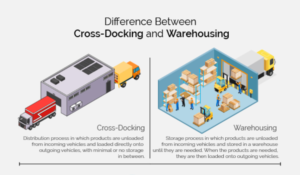
cross docking vs warehousing: cross docking is a freight-handling strategy designed to keep products moving instead of keeping them on warehouse shelves. In a traditional storage model, a shipment arrives, gets unloaded, checked, moved into a storage location, and eventually picked and prepared for another shipment. Cross-docking removes much of that storage cycle. Inbound freight is received, sorted or consolidated according to its destination, and transferred to an outbound vehicle with little or no long-term storage in between.
Maersk describes cross-docking as a process that minimizes storage and handling time so products can move more quickly through the supply chain.
Think of a cross-dock facility as a traffic interchange rather than a parking lot. A parking lot is designed to hold vehicles for a period of time; an interchange is designed to move traffic efficiently from one route to another. The same principle applies to freight. Trucks arrive with products, those products are directed toward their next destination, and outbound transportation carries them onward.
This approach can be especially valuable when freight is time-sensitive, demand is predictable, or inventory does not need to remain at a facility for days or weeks. Instead of paying to keep freight stationary, businesses focus their resources on coordinating movement. That can shorten lead times, reduce unnecessary handling, and make the distribution network more responsive. cross docking vs warehousing
How the Cross-Docking Process Works
A typical cross-docking operation begins before the freight even reaches the facility. The inbound shipment needs to have accurate information about its contents, destination, delivery requirements, and expected arrival time.
Once the truck arrives, workers unload and identify the freight, often using barcodes, scanners, warehouse management systems, transportation management systems, or other digital tools. Instead of placing every pallet into long-term storage, the freight is directed toward an outbound staging area based on destination, customer, route, or delivery schedule. The outbound shipment can then be consolidated and loaded onto another truck.
The effectiveness of this process depends heavily on coordination. If an inbound truck arrives several hours late while its outbound connection is scheduled to leave immediately, the entire sequence can become difficult to manage. cross docking vs warehousing That is why cross-docking works best when carriers, suppliers, warehouse teams, and customers share reliable information.
Inbound Logistics explains that cross-docking is commonly used to transfer goods directly between transportation modes while reducing storage space and unnecessary steps. The goal is not simply to move pallets quickly; it is to create a synchronized freight flow where every movement has a purpose.
When scheduling, labeling, transportation, and inventory information are aligned, the facility can function as a highly efficient transfer point rather than a conventional storage warehouse. cross docking vs warehousing
Why Minimal Storage Matters
cross docking vs warehousing: Minimal storage is one of the defining characteristics of cross-docking, and it changes the economics of freight distribution. Every additional day that inventory sits in a facility can create costs related to space, labor, utilities, insurance, handling, and inventory carrying requirements. There can also be less obvious costs.
Products may become obsolete, packaging can become damaged, and capital remains tied up in goods that are not yet generating revenue. By reducing the amount of time freight spends inside a facility, cross-docking can help companies limit these risks.
However, minimal storage should not be confused with zero handling. Freight still has to be unloaded, identified, sorted, staged, and loaded. The difference is that these activities are organized around immediate onward transportation rather than long-term inventory placement.
That distinction is important when evaluating cross-docking vs. warehousing because cross-docking does not eliminate logistics work; it changes where the work happens and how quickly it needs to be completed. A cross-dock operation therefore needs strong processes and dependable schedules. If those foundations are missing, the theoretical savings can disappear through delays, misroutes, additional labor, or missed outbound appointments.
What Is Traditional Warehousing?
Traditional warehousing is built around storing inventory until it is needed. A shipment arrives at the facility, is received and inspected, and is then assigned a storage location. Products may remain there for several days, weeks, or months depending on the business model.
When an order is received, warehouse personnel locate the inventory, pick the required products, pack them when necessary, and prepare them for shipment. This model gives businesses something cross-docking intentionally minimizes: an inventory buffer.
That buffer can be extremely valuable. Suppose a retailer knows that demand will increase before the holiday season. Instead of depending entirely on suppliers and transportation schedules during the busiest period, the retailer can build inventory ahead of time and store it until customers need it.
Traditional warehousing also gives companies greater flexibility when demand is unpredictable. If a supplier experiences a delay, stored inventory can help prevent an immediate stockout. If customers suddenly place more orders than expected, the business can fulfill those orders from inventory already on hand. Research and industry guidance consistently identify traditional warehousing as a stronger fit for seasonal products, slower-moving goods, unpredictable demand, and operations requiring longer-term inventory control.
How Traditional Warehousing Works
The traditional warehouse process typically includes receiving, inspection, putaway, storage, inventory management, picking, packing, staging, and shipping. Each step serves a purpose, particularly when a company needs precise control over a large or diverse inventory.
A warehouse can also support value-added services such as relabeling, repackaging, kitting, product customization, quality checks, and order assembly. Those capabilities make traditional warehousing much more than simply storing pallets.
The trade-off is that additional services and storage create additional operational requirements. Businesses need enough square footage, appropriate racking, forklifts or other material-handling equipment, warehouse personnel, inventory systems, security, utilities, and processes for maintaining accurate stock records.
Every time freight moves through another stage, there is also another opportunity for delay or damage. Traditional warehousing is therefore not inherently inefficient; it is optimized for a different objective. Its purpose is to provide inventory availability and operational flexibility, whereas cross-docking is optimized primarily for freight velocity and reduced dwell time. The right choice depends on which of those objectives matters more for a particular shipment.
Cross-Docking vs. Warehousing: Key Differences
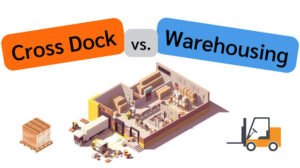
When comparing cross-docking vs warehousing, the biggest mistake is asking which method is universally better. Neither is. They solve different logistics problems. Cross-docking is designed to minimize dwell time and keep freight flowing, while traditional warehousing is designed to hold inventory and make it available when needed. Industry guidance similarly describes cross-docking as a speed-oriented model and conventional warehousing as a flexibility-oriented model.
| Factor | Cross-Docking | Traditional Warehousing |
|---|---|---|
| Primary purpose | Rapid freight movement | Inventory storage and control |
| Storage time | Minimal | Days, weeks, or months |
| Inventory holding cost | Generally lower | Generally higher |
| Delivery speed | Very fast when coordinated well | Depends on picking and fulfillment |
| Demand requirements | Best with predictable demand | Better for variable demand |
| Space requirement | Lower storage requirement | Larger storage footprint |
| Handling | Fewer storage-related touches | Receiving, putaway, picking, packing, shipping |
| Flexibility | Lower when schedules change suddenly | Higher due to inventory buffer |
| Best fit | High-volume, fast-moving freight | Seasonal, slow-moving, or diverse inventory |
Storage Time and Inventory Costs
Storage time has a direct effect on the cost structure of freight operations. With traditional warehousing, companies pay for the ability to hold inventory and access it later. That can be worthwhile when inventory availability has significant business value, but it becomes inefficient when products are simply sitting in storage because the supply chain has not yet moved them forward.
Cross-docking addresses this problem by reducing the amount of time freight remains at the facility. Several logistics sources identify reduced storage and inventory holding costs as central benefits of the cross-docking model.
Still, a lower storage bill does not automatically mean a lower total logistics bill. Cross-docking can require tighter appointment scheduling, faster labor response, better tracking systems, and highly reliable transportation partners. If inbound and outbound operations are poorly coordinated, a facility may need additional staging space or labor to recover from delays.
Traditional warehousing has its own cost advantage in a different situation: it allows companies to purchase, receive, and store inventory ahead of demand. That can protect businesses against supplier delays and demand spikes. The correct financial comparison should therefore consider total logistics cost, not simply the price of warehouse space.
Speed and Freight Handling
Speed is where cross-docking has its strongest advantage. Traditional warehousing requires freight to enter the storage system before eventually leaving it. Cross-docking attempts to shorten that journey by directing products from inbound receiving toward outbound transportation. Maersk notes that reducing storage and handling time can accelerate movement through the supply chain, particularly for time-sensitive products.
Fewer storage-related touches can also reduce opportunities for handling damage. A pallet that is unloaded, moved to a rack, retrieved later, transported to a picking area, staged, and loaded has gone through substantially more handling than freight that is transferred directly toward an outbound vehicle.
But speed creates its own operational pressure. Cross-docking requires accurate labeling, dependable appointments, proper dock capacity, and fast decision-making. A conventional warehouse can absorb some scheduling problems because inventory remains available inside the building. A cross-dock has less room for error because a missed connection can affect the next leg of transportation almost immediately.
Flexibility and Inventory Control
Traditional warehousing wins when flexibility and inventory control are the priority. Businesses can maintain safety stock, respond to unexpected orders, hold seasonal products, and distribute inventory across multiple locations. If demand changes suddenly, the company has physical inventory available to respond. This makes traditional warehousing particularly useful for products that do not move at a predictable rate.
Cross-docking is more dependent on synchronized demand and supply. If a company knows that a particular quantity of freight will arrive every Tuesday and that specific outbound trucks will leave every Tuesday afternoon, cross-docking can work extremely well.
But if shipments arrive unpredictably and customers place irregular orders, the model becomes harder to manage. In that situation, the warehouse buffer becomes an asset rather than an expense. The fundamental question is therefore simple: Does your freight need to wait, or does it need to move? The answer often reveals which logistics model makes more sense.
Benefits of Cross-Docking for Freight
Cross-docking can provide significant advantages for businesses that have the right freight profile. One of its biggest benefits is reduced dwell time. Freight can move through a facility without being placed into long-term storage, which can accelerate delivery and reduce the amount of inventory occupying warehouse space.
It can also support shipment consolidation, allowing products from different suppliers or inbound loads to be combined into more efficient outbound transportation. In logistics networks where transportation costs and delivery windows matter heavily, this can create meaningful operational value.
Another benefit is improved freight velocity. When goods move rapidly from receiving to shipping, businesses can shorten the time between supplier and customer. That can be especially useful for perishable products, retail replenishment, promotional inventory, and other goods where timing directly affects value.
Cross-docking can also reduce some of the labor associated with putaway and later retrieval because the freight does not follow the full storage cycle. Current industry sources continue to identify lower storage requirements, faster fulfillment, reduced handling, and improved transportation efficiency as key reasons businesses consider cross-docking.
Lower Storage and Handling Costs
The cost advantage of cross-docking comes from removing activities that do not add value to a particular shipment. If a pallet arrives today and already has a confirmed customer destination, placing it into storage for three days only to retrieve it later may create unnecessary work.
Cross-docking attempts to move that pallet directly toward its outbound destination. That can reduce the requirement for storage capacity and decrease the number of inventory movements.
However, the savings depend on volume and execution. A company moving only a small amount of unpredictable freight may not benefit enough to justify the coordination required. A high-volume shipper with consistent inbound and outbound schedules can potentially gain much more because the same streamlined process is repeated hundreds or thousands of times.
Cross-docking therefore becomes more attractive as freight flows become sufficiently predictable and frequent. The business case should compare warehouse rent, labor, handling, inventory carrying costs, transportation, technology, and potential delay costs before making a decision.
Faster Delivery and Turnaround
For many businesses, faster delivery is not simply a customer-service benefit; it can be a competitive advantage. Retailers want shelves replenished quickly, distributors want freight delivered within narrow appointment windows, and manufacturers may need components to arrive according to production schedules.
Cross-docking can help compress the time between receiving and outbound shipment because the facility is designed around movement rather than storage.
This is particularly valuable when every hour matters. Perishable products can lose value while waiting, promotional goods can miss selling windows, and time-sensitive freight can create downstream scheduling problems if it sits too long. T
he challenge is maintaining that speed consistently. A fast process that fails once every few shipments may not be better than a slower process that reliably meets delivery commitments. Successful cross-docking is therefore less about simply moving quickly and more about creating predictable speed.
Benefits of Traditional Warehousing
Traditional warehousing remains essential because not every supply chain can operate on immediate freight movement. Businesses frequently need to build inventory before demand occurs. Seasonal retailers, manufacturers, distributors, wholesalers, and companies with long or unreliable supplier lead times may depend on stored inventory to maintain customer service. Traditional warehousing provides a buffer between supply and demand, allowing companies to decouple the timing of production, transportation, and customer orders.
Warehouses also provide operational flexibility. A company can hold different SKUs, serve multiple customer segments, perform value-added services, and fulfill orders at different times. If demand changes, stored inventory can be redirected without necessarily requiring a new inbound shipment.
This flexibility has a cost, but that cost can be justified when inventory availability is more valuable than rapid transit. Traditional warehousing can also be preferable when freight requires inspection, repackaging, labeling, kitting, or other services before final delivery. For these situations, trying to force a cross-docking model may create more operational complexity than it removes.
When Should You Choose Cross-Docking?
Cross-docking is generally a strong candidate when freight moves quickly, demand is reasonably predictable, and the primary objective is to reduce the time between inbound receipt and final delivery. It is particularly useful when products have a short selling window or when transportation schedules are tightly coordinated.
High-volume retail replenishment, food and beverage distribution, certain consumer packaged goods, promotional merchandise, and freight consolidation are common examples of situations where rapid movement can provide value. Industry guidance also points to time-sensitive and high-turnover goods as strong candidates for cross-docking.
You should also examine the reliability of your supply chain before choosing this approach. Do suppliers consistently ship on schedule? Can carriers meet appointment windows? Do you have accurate shipment information before freight arrives? Can your team quickly identify, sort, and stage pallets? If the answer is yes, cross-docking becomes much more attractive. If several answers are no, traditional warehousing may provide the buffer needed to protect service levels.
When Is Traditional Warehousing Better?
Traditional warehousing is usually better when your freight needs to remain available rather than immediately move onward. Seasonal inventory is an obvious example. A retailer may need to receive thousands of units weeks before a holiday promotion begins. Cross-docking those products immediately would not solve the actual business problem because the customer does not need the inventory yet. The business needs a controlled place to hold it.
Warehousing is also useful when demand is difficult to forecast. If customer orders fluctuate substantially, keeping inventory nearby can protect against stockouts. The same applies to businesses dealing with slow-moving products, large SKU counts, bulk purchasing, uncertain supplier lead times, or special handling requirements.
In these circumstances, paying for storage can be the price of flexibility. The objective is not to minimize warehouse costs at all times; it is to optimize the entire supply chain around customer service, inventory availability, transportation efficiency, and profitability.
Can You Use Cross-Docking and Warehousing Together?
Yes. In many real-world supply chains, the best answer is not cross-docking vs warehousing, but cross-docking and warehousing. A hybrid strategy allows businesses to treat different freight differently. Fast-moving products with predictable demand can flow through a cross-dock, while slower-moving or seasonal inventory can enter traditional storage. This approach lets a company reduce unnecessary storage without giving up the inventory buffer it needs.
Imagine a distributor handling 500 SKUs. Perhaps 100 of those SKUs represent the majority of daily shipment volume and arrive on predictable schedules. Those fast movers could be routed through cross-docking, while the remaining products could be stored conventionally. The result is a more flexible logistics network that uses the right process for each category of freight. Industry sources increasingly describe hybrid strategies as a practical approach, particularly for businesses balancing speed with inventory flexibility.
How to Choose the Right Freight Strategy
The best decision starts with your freight data rather than the warehouse model you happen to prefer. Review product velocity, order frequency, demand predictability, supplier reliability, delivery windows, storage costs, handling costs, transportation schedules, and inventory carrying costs.
Then determine how much time your freight actually spends waiting between transportation stages. If a significant portion of that time is unnecessary dwell time, cross-docking may offer an opportunity to streamline the process.
A useful evaluation can be organized around five questions:
How quickly does the freight need to reach its destination?
How predictable are inbound shipments and customer demand?
How expensive is it to hold the inventory?
Does the freight require storage or value-added services?
Can your carriers and warehouse team coordinate precise schedules?
The answer should be based on total supply-chain performance rather than one metric. Cross-docking can reduce storage and accelerate freight, but it requires operational discipline. Traditional warehousing costs more to maintain but provides flexibility and inventory availability. The right solution is the one that produces the best balance of cost, speed, reliability, and customer service for your specific freight profile.
Conclusion
The debate over cross-docking vs. traditional warehousing is really a debate about what your freight needs most. Cross-docking is designed for velocity. It can reduce storage requirements, limit unnecessary handling, accelerate delivery, and help high-volume businesses keep products moving through the supply chain.
Traditional warehousing is designed for availability and flexibility. It allows companies to hold inventory, absorb demand fluctuations, prepare for seasonal peaks, and perform additional services before products reach customers. Neither approach is automatically better.
For freight with predictable demand, reliable transportation schedules, and a strong need for rapid movement, cross-docking can be an efficient alternative to conventional storage. For inventory that needs to wait, requires additional processing, or protects the business against demand and supply uncertainty, traditional warehousing remains the stronger choice.
And for many businesses, the most practical answer is a hybrid model that uses both. The goal is not to eliminate warehousing or adopt cross-docking simply because it sounds faster; the goal is to build a freight strategy where every shipment spends the right amount of time in the right place.
FAQs
Is cross-docking cheaper than traditional warehousing?
Cross-docking can be cheaper when freight moves frequently and predictably because it reduces the need for long-term storage and some storage-related handling. However, it still requires labor, transportation coordination, technology, dock capacity, and accurate scheduling. A poorly managed cross-docking operation can create delays that offset its expected savings. The most accurate comparison should therefore consider total logistics costs rather than warehouse rent alone.
What freight is best for cross-docking?
Cross-docking is generally best for high-volume, fast-moving, time-sensitive, or predictable freight. Products that need rapid replenishment or have limited shelf life can benefit particularly strongly because minimizing dwell time helps preserve value and shorten delivery cycles. Retail replenishment, certain food products, consumer goods, and freight consolidation are common examples. The more predictable the inbound and outbound schedules are, the easier it is to operate an effective cross-dock.
Is cross-docking faster than warehousing?
Yes, cross-docking is generally faster when the operation is properly coordinated because freight moves from inbound transportation toward outbound transportation without spending significant time in storage. Traditional warehousing adds receiving, putaway, storage, retrieval, and often picking and packing activities. Cross-docking reduces or eliminates much of the storage cycle. Its speed advantage depends on accurate scheduling, reliable carriers, and efficient dock operations.
Can small businesses use cross-docking?
Small businesses can use cross-docking, particularly when they have predictable freight flows or work with a third-party logistics provider that already operates cross-docking facilities. The important question is not company size but shipment characteristics. If freight volume is too low or demand is highly unpredictable, traditional warehousing may be more practical. A 3PL can sometimes make cross-docking accessible without requiring a business to build and operate its own facility.
Is a hybrid freight strategy better?
A hybrid strategy can be better when a business handles different types of freight with different requirements. Fast-moving products can be cross-docked while slower-moving, seasonal, or safety-stock inventory can remain in traditional storage. This approach gives companies access to the speed of cross-docking without eliminating the flexibility of warehousing. For businesses with diverse product portfolios, using both methods can provide a more balanced and resilient logistics strategy.