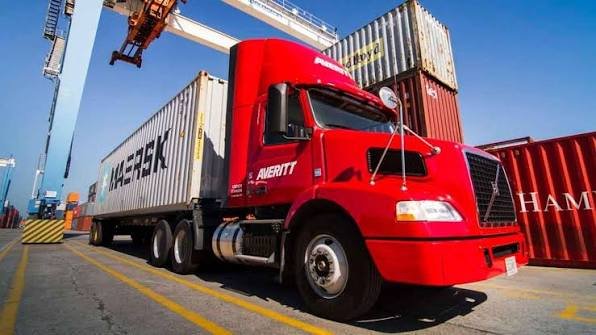
freight transloading MemphisIf you ship freight through Memphis, you have probably encountered situations where a load arrives in one type of transp: ortation but needs to continue its journey using another.
A container might arrive by rail and need to move onto a truck. Imported goods may reach a distribution facility and need to be separated into regional shipments. A large shipment may also need to move from one trailer to several smaller trucks before reaching its final destinations. Freight transloading is the logistics process that makes these transitions possible without requiring the freight to remain in long-term storage.
For Memphis shippers, transloading can be particularly useful because the city sits at the intersection of several major freight networks. Memphis has extensive highway connectivity, significant rail infrastructure, a major cargo airport, and access to the Mississippi River.
Memphis International Airport handled approximately 6.54 billion pounds of cargo in 2025, according to airport officials, demonstrating the scale of freight activity moving through the region. The latest Airports Council International figures also placed Memphis International Airport among the world’s busiest cargo airports, with about 2.97 million metric tonnes of cargo handled in 2025.
Understanding how transloading works can help businesses make better decisions about transportation, inventory, warehousing, and delivery. Instead of treating every shipment as a simple point-to-point movement, transloading gives shippers another option:
strategically changing transportation modes or reorganizing freight at a convenient location. For companies moving goods through Memphis, that flexibility can translate into faster distribution, better equipment utilization, and potentially lower overall logistics costs.
What Is freight transloading Memphis?
Freight transloading is the process of transferring goods from one transportation method or container to another during the journey from origin to destination.
The freight itself may remain at a transloading facility for only a short period while workers unload, inspect, sort, consolidate, palletize, or reload the shipment. Unlike traditional warehousing, the primary objective is usually movement rather than long-term storage.
Think of a transloading facility as a relay station: one transportation method hands the freight to another so the shipment can continue moving efficiently.
The process can involve many combinations. A container arriving by rail could be unloaded and transferred into a dry van. Imported cargo arriving at a port could be placed onto domestic trucks.
Freight delivered in a full truckload could be broken into smaller shipments for multiple destinations. Pallets can also be transferred between trailers when equipment, routes, or delivery requirements change. The exact process depends on the cargo, transportation modes, handling requirements, and final delivery schedule.
For a Memphis business, this distinction matters because the city provides access to multiple freight networks.
The U.S. Department of Transportation’s Tennessee freight network data identifies 2,705 miles of multimodal rail freight routes statewide and lists Memphis among Tennessee’s major ports. Memphis therefore provides a natural environment for companies that need to shift cargo between modes without sending freight through a distant distribution center.
How the Transloading Process Works
A typical transloading operation begins when freight arrives at a facility on one transportation mode. The receiving team checks the shipment against the paperwork, examines the cargo for visible damage, and determines how the freight should be handled.
Depending on the shipment, workers may unload cartons, pallets, drums, machinery, bulk materials, or containerized cargo. The freight can then be sorted, counted, labeled, repackaged, or consolidated before being loaded onto the next transportation method.
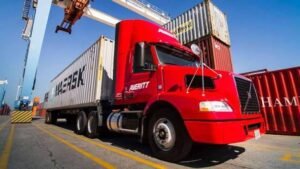
The next step is usually the transfer itself. For example, a container may arrive by rail, be unloaded at a Memphis-area facility, and then have its contents loaded onto one or more trucks.
The reverse can also happen. Trucked freight may arrive at a transloading warehouse and subsequently be loaded into rail equipment when rail transportation makes more sense for the longer portion of the journey.
Technology and documentation are also important. A professional operation needs accurate inventory records, receiving procedures, shipment identification, and communication between the shipper, carrier, and facility.
Poor coordination can create unnecessary dwell time even when the physical loading process is fast. The goal is therefore not simply to move boxes from one trailer to another; it is to create a controlled handoff between different parts of the supply chain.
Transloading vs. Cross-Docking
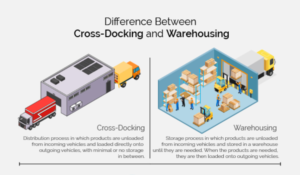
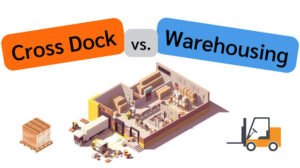
Transloading and cross-docking are related concepts, but they are not interchangeable. Cross-docking generally involves receiving goods and moving them quickly to an outbound vehicle with little or no storage.
The emphasis is on minimizing warehouse dwell time and moving shipments directly toward their next destination. Transloading is broader because it specifically focuses on transferring freight between transportation modes, containers, or equipment.
For example, imagine that a manufacturer ships a container of products into Memphis. If the container is unloaded and the products are immediately placed onto several outbound trucks headed to different customers, the operation could involve both transloading and cross-docking principles.
If the freight simply needs to be transferred from an intermodal container into a domestic trailer for a longer truck journey, the operation is primarily transloading.
| Feature | Freight Transloading | Cross-Docking |
|---|---|---|
| Primary purpose | Transfer freight between transportation modes or equipment | Move inbound goods quickly to outbound shipments |
| Storage | Usually minimal or short-term | Usually minimal |
| Common use | Rail-to-truck, container-to-trailer | Truck-to-truck, inbound-to-outbound |
| Freight handling | May include unloading, sorting, palletizing, and reloading | Usually limited handling |
| Main advantage | Transportation flexibility | Faster distribution |
The distinction is useful when selecting a logistics provider because the equipment, labor, facility layout, and operational processes required may differ.
Why Memphis Is a Strategic Location for Transloading
Memphis has long been associated with freight transportation, but its importance comes from more than one mode of transportation.
Its geographic position provides access to major interstate routes, rail networks, the Mississippi River, and Memphis International Airport. That combination creates opportunities for shippers that need to move cargo through multiple transportation systems.
The scale of the airport alone illustrates the importance of freight to the local economy. Memphis International Airport reported 6.54 billion pounds of cargo in 2025.
ACI’s 2025 global airport rankings placed MEM sixth worldwide by cargo volume at approximately 2.97 million metric tonnes, although that measure differs from the airport’s reported pound-based figure because the datasets and methodologies are not identical.
The Memphis-Shelby County Port also plays a role in regional freight movement. The U.S. Bureau of Transportation Statistics’ 2025 Port Performance Freight Statistics report listed Memphis-Shelby County Port at approximately 8.2 million short tons in the reporting data.
When road, rail, air, and water transportation are considered together, Memphis becomes more than a destination; it can function as a strategic transfer point within a broader supply chain.
Memphis as a Multimodal Freight Hub
A multimodal freight hub allows businesses to use different transportation modes according to the requirements of each portion of a shipment’s journey. A shipper might use rail for a long-distance movement because it can efficiently handle large volumes, then use trucks for regional distribution.
Another company might use air freight for time-sensitive cargo and then transfer that cargo to local delivery vehicles.
This is where freight transloading in Memphis can become valuable. Instead of forcing one transportation mode to handle the entire trip, a company can select the most practical mode for each segment.
That approach is particularly useful when the origin and destination have different transportation capabilities. A shipment does not have to remain in the same container or trailer from beginning to end.
Memphis’s infrastructure supports this model. The city is positioned along the Mississippi River, connected to national highway networks, served by major rail infrastructure, and home to a major cargo airport. For businesses serving customers across the Mid-South or moving freight between national markets, having a transfer point in Memphis can provide operational flexibility.
The Role of Air, Road, Rail, and River Freight
Each transportation mode has different strengths. Air freight is generally associated with speed and time-sensitive shipments. Trucking provides flexible door-to-door transportation and is particularly useful for regional distribution.
Rail can be advantageous for moving large volumes over longer distances, while river transportation can support heavy and bulk cargo movements.
Transloading connects these strengths. A shipment does not necessarily have to stay within one transportation network. Instead, a logistics manager can determine where a mode change makes economic or operational sense.
For instance, freight traveling a long distance by rail could be transferred to trucks near Memphis for final delivery to customers throughout Tennessee, Arkansas, Mississippi, or surrounding markets.
This approach is essentially about matching the transportation method to the job. Using a truck for every mile is not always the best answer. Using rail for every segment may not be practical either. Transloading creates the bridge between those systems and allows shippers to design a transportation strategy around cost, distance, timing, equipment availability, and customer requirements.
Benefits of Freight Transloading for Memphis Shippers
The biggest advantage of transloading is flexibility. Supply chains rarely operate in a perfectly predictable environment. Carrier capacity changes, customer demand shifts, equipment becomes unavailable, and transportation costs fluctuate. A shipment strategy that works well one month may become inefficient the next.
Transloading gives shippers another operational tool. Instead of treating a shipment as locked into one transportation method, businesses can introduce a transfer point where freight can be reorganized. That can make it easier to serve multiple destinations, change equipment, consolidate shipments, or move goods into a different transportation network.
For Memphis shippers, the local transportation environment makes that flexibility particularly relevant. With multiple freight modes operating around the region, a properly selected transloading facility can serve as an intermediate point between suppliers, carriers, distribution centers, and final customers.
Lower Transportation and Handling Costs
Cost savings are one of the most common reasons companies investigate transloading, although actual savings depend heavily on the shipment. A transloading strategy can reduce costs when it allows a company to use a more economical transportation mode for a substantial part of the journey and reserve trucks for the portions where their flexibility provides the most value.
For example, a shipper may move a large quantity of goods over a long distance using rail and then use trucks only for regional delivery. Instead of paying for a single truck movement covering the entire route, the company can divide the journey between transportation modes.
There can also be equipment-related benefits. A shipper might avoid keeping expensive specialized equipment tied up when a standard domestic trailer is more appropriate for the next stage. Similarly, transferring freight into equipment suited to the final destination can simplify regional distribution.
However, transloading itself has costs. Labor, facility handling, equipment, appointment scheduling, storage, palletization, and additional transportation all need to be considered. The correct comparison is therefore not simply the transloading fee versus the cost of a direct shipment. Shippers should compare the total landed logistics cost of each strategy.
Faster Freight Movement
Time is another important factor. A traditional warehouse may be designed to receive inventory, store it, manage it, and eventually pick it for outbound orders. A transloading facility can focus on moving freight through the operation with limited dwell time.
That can be valuable when a shipper does not need long-term storage but still needs a physical location where cargo can change transportation modes. Instead of sending freight to a large distribution center, storing it for days, and then scheduling outbound delivery, a company may be able to transfer and dispatch the cargo much sooner.
Speed is particularly important for time-sensitive freight, retail replenishment, seasonal inventory, and shipments that have strict delivery appointments. The faster freight moves through the intermediate facility, the less inventory is tied up in transit or temporary storage.
The important word is coordination. A transloading facility cannot create speed if inbound and outbound transportation are poorly synchronized. The most efficient operations coordinate arrival appointments, unloading, freight handling, outbound equipment, documentation, and final dispatch.
Better Inventory Flexibility
Transloading can also improve inventory flexibility because it allows businesses to postpone certain distribution decisions until freight reaches a strategic location. A manufacturer may send a larger shipment toward Memphis and then divide it into smaller regional loads based on actual customer demand.
This is useful because demand forecasts are never perfect. Sending individual shipments from the origin to every customer can be expensive, especially when order volumes are small. A centralized transfer point allows freight to move toward a region first and then be distributed according to current requirements.
The strategy can also help companies avoid unnecessary long-term warehousing. If goods can move quickly from an inbound shipment into outbound transportation, the business may need less storage capacity for that particular supply chain flow.
That does not mean transloading replaces warehousing. Businesses with significant inventory requirements still need storage facilities. Instead, transloading gives shippers an additional option for freight that is intended to keep moving.
What Types of Freight Can Be Transloaded?
There is no single type of freight that defines transloading. The process can support many cargo categories as long as the facility has the appropriate equipment, labor, space, and handling procedures. Common examples include palletized goods, consumer products, industrial materials, packaged products, machinery, construction materials, and certain bulk commodities.
The specific requirements can vary dramatically. A palletized consumer product may only require a forklift and loading dock. Heavy machinery may require specialized lifting equipment and additional safety procedures. Temperature-sensitive products may require controlled environments, while hazardous materials can require specialized compliance procedures and facilities.
This is why shippers should never assume that every transloading provider can handle every type of cargo. A facility designed for standard palletized freight may not be equipped for oversized machinery or specialized materials.
Palletized and General Freight
Palletized freight is often straightforward to transfer because forklifts and pallet jacks can move standardized units efficiently. A shipment arriving on one trailer can be unloaded, counted, staged, and loaded onto another trailer with relatively little processing.
General freight can also be sorted by destination. Suppose a manufacturer sends 20 pallets to Memphis, but those pallets ultimately need to reach customers in several states. A transloading facility can receive the shipment and organize the pallets into outbound loads according to destination and delivery schedule.
This type of operation can support regional distribution without requiring the shipper to establish a dedicated warehouse in every market. Memphis can function as the intermediate point where freight is reorganized before final delivery.
For shippers, the key considerations include dock availability, forklift capacity, trailer compatibility, appointment procedures, inventory tracking, and the facility’s ability to handle the volume expected.
Oversized, Bulk, and Specialized Freight
Specialized freight requires more planning. Oversized equipment, heavy machinery, construction materials, and bulk products may require cranes, specialized forklifts, ramps, secure staging areas, or other equipment.
A shipper should provide detailed cargo information before selecting a provider. Dimensions, weight, packaging, handling requirements, hazardous-material classification where applicable, and transportation equipment all influence whether the facility is suitable.
Specialized transloading can be highly valuable because not every distribution center is equipped to handle unusual freight. A facility with the correct equipment can become an important link between modes, particularly when a shipment cannot simply be transferred using standard dock equipment.
The safest approach is to treat cargo compatibility as a first-stage qualification requirement rather than something to resolve after the shipment arrives.
How Much Does Freight Transloading Cost?
There is no universal price for freight transloading in Memphis because pricing depends on the characteristics of each shipment and the services required. A basic pallet transfer may involve relatively simple labor and equipment, while a specialized load could require multiple workers, heavy equipment, additional staging space, and more complex coordination.
Some providers may price handling on a per-pallet basis, while others may use hourly labor rates, per-load charges, container handling fees, storage charges, or customized pricing. Transportation to and from the facility is generally a separate component of the total logistics cost.
Rather than looking for the cheapest handling rate, shippers should evaluate the complete cost structure. A facility with a slightly higher handling fee may produce a lower total cost if it reduces dwell time, improves outbound scheduling, minimizes additional storage, or is located closer to major transportation routes.
Factors That Influence Transloading Costs
Several variables influence the final price. Shipment volume is one of the most obvious. Handling 50 pallets is operationally different from handling a single pallet, and high-volume customers may receive different pricing structures.
Cargo characteristics also matter. Heavy, oversized, fragile, hazardous, or temperature-sensitive freight can require additional equipment and labor. Packaging requirements, palletization, labeling, sorting, inventory counts, and rework can also add handling costs.
Storage duration is another variable. Although transloading is primarily designed for freight movement, a shipment may occasionally need to remain at the facility for a short period. Storage fees may apply depending on the provider’s pricing model.
Transportation coordination should also be included in the calculation. If freight requires a drayage move, local pickup, final-mile delivery, or multiple outbound trucks, those charges form part of the overall cost.
A useful evaluation should therefore consider:
| Cost Factor | What Can Affect the Price |
|---|---|
| Freight volume | Pallets, containers, weight, or load count |
| Handling | Unloading, loading, sorting, counting |
| Equipment | Forklifts, cranes, specialized equipment |
| Storage | Length of time freight remains onsite |
| Labor | Number of workers and handling complexity |
| Transportation | Drayage, local delivery, outbound trucking |
| Special services | Palletizing, labeling, rework, inspection |
Choosing a Freight Transloading Provider in Memphis
Choosing a transloading provider should involve more than searching for a warehouse with available dock space. The right provider needs to fit the shipment, transportation network, service requirements, and delivery schedule.
Start by looking at the facility’s location relative to your transportation lanes. A facility that is strategically positioned near major highways, rail connections, airports, or other relevant freight infrastructure may reduce unnecessary miles and handling.
Then examine the facility itself. Does it have enough dock doors? Can it handle your freight weight? Does it have appropriate forklift capacity? Can it accommodate your trailer types? Is there enough staging space during busy periods?
Operational reliability matters just as much. Ask about appointment scheduling, receiving procedures, inventory visibility, damage documentation, and communication. A technically capable facility can still create problems if its processes are disorganized.
What Services Should You Look For?
A strong provider should offer services that align with the entire freight movement rather than only one isolated handling task. Depending on your supply chain, that could include freight transloading, pallet transfers, short-term staging, cross-docking, inventory management, local transportation, and delivery coordination.
Having multiple services available can simplify the supply chain because you do not necessarily need separate vendors for every step. For example, a company could receive a shipment, transfer it between equipment, stage it briefly, and then arrange regional delivery through one logistics partner.
Technology is also increasingly important. Inventory tracking, shipment notifications, digital documentation, and accurate receiving records can make a significant difference when multiple shipments move through a facility.
Questions to Ask Before Choosing a Provider
Before committing to a transloading provider, ask practical questions about the operation. Confirm exactly what freight types the facility accepts and what equipment is available. Ask how quickly inbound shipments are normally processed and how outbound appointments are coordinated.
You should also understand the pricing structure before the first load arrives. Ask whether handling is charged per pallet, per load, by labor hours, or through another model. Confirm whether short-term storage, rework, palletization, detention, or special handling can generate additional charges.
Most importantly, explain your actual logistics flow. A provider needs to know where the freight comes from, how it arrives, what needs to happen at the facility, and where it goes afterward. The more accurately the process is understood upfront, the easier it is to design an efficient transloading plan.
When Should a Memphis Shipper Use Transloading?
Transloading is most useful when the shipment benefits from a change in transportation mode, equipment, destination configuration, or distribution strategy. It is particularly attractive when a business wants to use one transportation method for the long-haul portion and another for regional delivery.
Consider a company receiving a large shipment that ultimately needs to be distributed to several customers throughout the Mid-South. Sending separate trucks directly from the origin might create unnecessary miles and low trailer utilization. Moving the larger shipment into Memphis and dividing it into regional outbound loads could provide a more practical alternative.
The same concept applies to intermodal freight. A company may use rail for a significant portion of the journey and trucking for the final segment. Without transloading, the freight may be constrained by the original equipment or transportation mode.
Common Supply Chain Scenarios
One common scenario involves rail-to-truck transfers. Rail can move large volumes over long distances, while trucks provide the flexibility needed for regional delivery. Memphis-area transloading facilities can provide the physical connection between those two systems.
Another scenario involves container-to-trailer transfers. Imported or containerized goods may need to move into domestic equipment for distribution within the United States. Transloading provides a place where that transfer can happen without requiring the freight to enter a traditional long-term warehouse.
A third scenario involves shipment consolidation and deconsolidation. Multiple inbound shipments can be organized into larger outbound loads, or one large inbound shipment can be divided into smaller deliveries. This can help businesses align transportation with actual customer demand.
Seasonal operations are another strong use case. During peak periods, businesses may need additional flexibility without committing to permanent warehouse space. Short-term staging and transloading can help companies handle temporary increases in freight volume.
For Memphis shippers, the decision ultimately comes down to economics and operational requirements. If a mode change or freight reconfiguration can improve transportation efficiency, transloading deserves consideration.
Conclusion
Freight transloading is a strategic logistics process that allows shippers to transfer cargo between transportation modes, containers, or equipment without relying on long-term warehousing.
For Memphis businesses, the concept is especially relevant because the region connects major road, rail, air, and river freight networks. Memphis International Airport’s substantial cargo activity and the region’s multimodal transportation infrastructure demonstrate why the city remains an important freight location.
The value of transloading goes beyond simply moving freight from one trailer to another. Done correctly, it can help businesses combine the strengths of different transportation modes, improve regional distribution, reduce unnecessary handling, and create greater flexibility within the supply chain.
It can also provide an alternative to long-term warehousing when freight only needs a short staging period before continuing to its destination.
For companies searching for freight transloading in Memphis, the most important step is selecting a facility that matches the cargo and transportation strategy. Consider location, equipment, handling capabilities, turnaround time, inventory controls, pricing, and transportation services before making a decision.
The right transloading partner can function as an extension of your logistics operation rather than simply serving as a place where freight is unloaded and reloaded.
Frequently Asked Questions
Is transloading the same as warehousing?
No. Transloading primarily involves transferring freight between transportation modes or equipment, while warehousing generally involves storing inventory for a longer period. A transloading facility may provide short-term staging, but its primary objective is usually to keep freight moving rather than hold it as inventory.
How long does freight transloading take?
The timeframe depends on the shipment, facility, equipment, appointment schedule, and handling requirements. A straightforward pallet transfer can be completed relatively quickly, while complex or oversized freight may require additional time. Coordinating inbound and outbound transportation in advance is one of the best ways to reduce unnecessary dwell time.
Is freight transloading available for small shipments?
Yes, depending on the provider. Some facilities specialize in high-volume container or truckload movements, while others can handle palletized or smaller shipments. Shippers should confirm minimum volume requirements and pricing before arranging a load.
Can transloading reduce transportation costs?
It can, but savings are not automatic. Transloading may reduce total logistics costs when it allows a shipper to combine economical long-distance transportation with flexible regional trucking. The calculation should include handling, facility, storage, and additional transportation costs rather than comparing only the transloading fee.
How do I find freight transloading in Memphis?
Start by identifying providers that can handle your specific cargo and transportation modes. Look for facilities with suitable dock space, forklifts or specialized equipment, short-term staging capabilities, inventory controls, and convenient access to the transportation routes your freight uses. Request a detailed quote based on your actual shipment volume, freight type, inbound mode, outbound mode, and delivery requirements.